
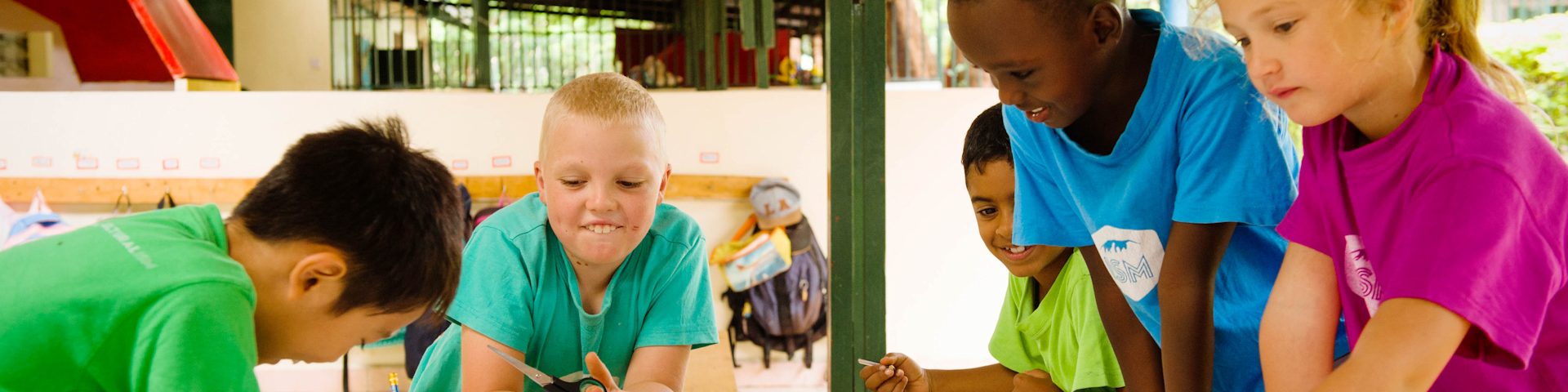
Catch a glimpse of our school
Founded in 1969 as International School Moshi, UWC East Africa has grown from a pioneering school into a globally connected learning community. As the first school in Africa to offer the International Baccalaureate, we have long been at the forefront of international education. In 2019, we joined the United World Colleges movement, becoming the 18th UWC worldwide and the second on the continent.
Today, we are one school across two campuses in Moshi and Arusha, in northern Tanzania. Together, we offer a fully accredited International Baccalaureate education through the Primary Years Programme (PYP), Middle Years Programme (MYP), and Diploma Programme (DP), alongside a strong residential life that brings students together from around the world.
Our community is made up of around 700 students
aged 3 to 19, representing over 100 nationalities.
More than 300 students live in our residential houses,
creating a vibrant, diverse environment where learning
continues far beyond the classroom. We are proud to serve
both local and international families, offering an education
that balances academic challenge with individual care
and a strong sense of belonging.
At UWC East Africa, learning is not only about academic success.
It is about building curiosity, resilience, and a sense of responsibility
to others and the world around us.
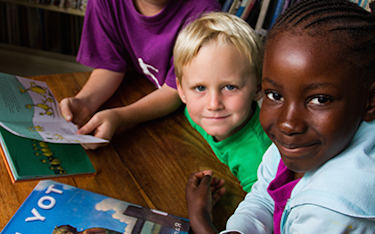
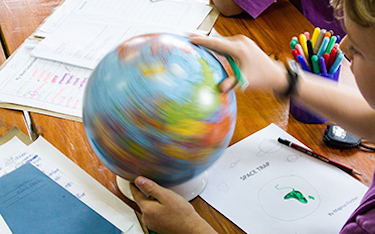
Our students
- are curious about the world and different cultures,
- demonstrate the values of UWC and of the International Baccalaureate,
- strive to learn about the values, beliefs and practices of their own culture so that they can better understand those found in their host country and elsewhere,
- seek to understand how personal values, beliefs and practices impact one’s own and other’s contexts for learning and interacting in a variety of settings,
- are influenced by, but not confined to, the cultures of their upbringing,
- recognise that many values, beliefs and practices are in fact universal,
- recognise and reflect on their place in an increasingly interdependent, globalised and connected world,
- recognise and critically engage with multiple perspectives,
- bridge cultures and act to create a more peaceful and sustainable world.